
Selection & System Sizing
Can a 5kWh Battery Power a Poultry Farm Overnight?
Calculate usable battery energy against lighting, ventilation, heating, pumping and control loads before selecting a system.
Quick answer
A 5 kWh battery may cover a small poultry house's efficient lights and controls overnight, but it is usually insufficient for substantial ventilation, electric heating or pumping. At 80% usable depth of discharge and 90% inverter efficiency, a 5 kWh battery supplies about 3.6 kWh of AC energy in a planning example.
Application load analysis
Start with every overnight load.
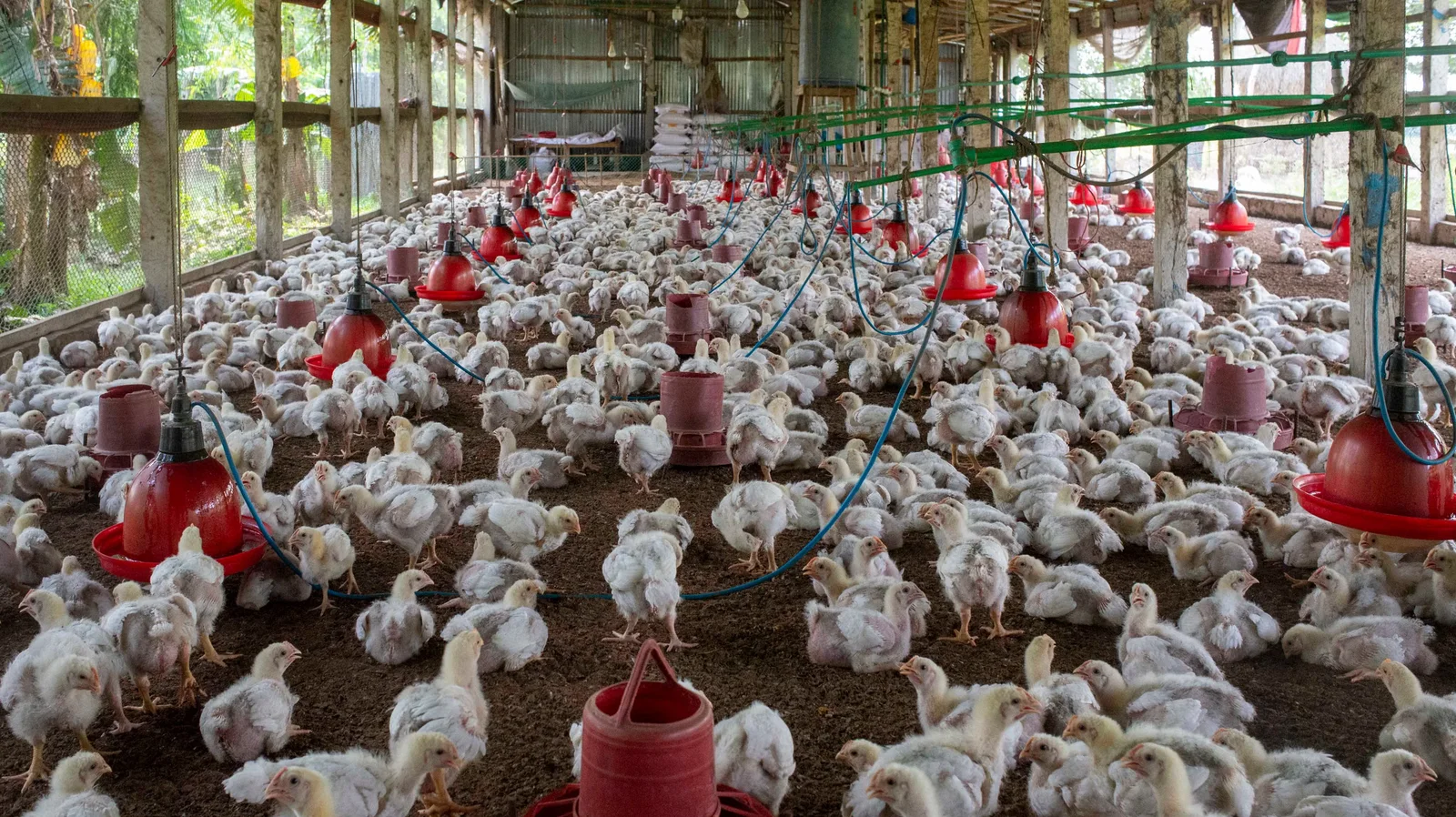
Replace every illustrative input before selection
The application block above keeps the real poultry-house context beside the load breakdown, but its wattages and hours are still illustrative. Replace them with the farm’s load nameplates, quantities, duty cycles and measured operating hours.
For an initial calculation:
Usable AC energy = nominal battery × usable DoD × inverter efficiency
Using typical planning assumptions—not confirmed product specifications—of 80% usable depth of discharge and 90% inverter efficiency:
5 kWh × 0.80 × 0.90 = 3.6 kWh usable AC energy
The selected battery and inverter datasheets must replace these assumptions in the final calculation.
Check omitted night loads
The displayed 3.82 kWh total covers the listed lighting, ventilation, water-pump and feeding/control example. It does not include electric heating, alarms, communications, cleaning equipment or other night loads. Add each omitted load before comparing the total with usable battery energy.
This example already exceeds the 3.6 kWh planning allowance by 0.22 kWh before reserve. A heating load would increase the requirement sharply: a 1.5 kW heater running for six hours consumes 9 kWh by itself.
Capacity is not the only constraint
The battery and inverter must also supply instantaneous power. Motors in fans, feeders and pumps can draw several times their running current during starting. Ask for motor nameplates, starting method and whether loads can start together.
For animal welfare, classify loads:
- critical: ventilation, alarms, environmental controls and emergency lighting;
- important: feeding, watering and selected lighting;
- deferrable: nonessential lighting, cleaning or pumping that can run during solar hours.
A smaller dedicated backup for critical loads can be safer than allowing noncritical loads to drain the full system.
Information required before quotation
- Farm location and overnight duration by season.
- Bird count, house dimensions and ventilation plan.
- Load nameplates, quantities, duty cycles and motor starting currents.
- Heating source and required temperature range.
- Critical-load priority and acceptable backup duration.
- Grid, generator and solar availability.
- Voltage, frequency, phase and installation environment.
Final sizing should include autonomy reserve, battery aging, low-temperature or high-temperature derating and expected cloudy-day operation.
FAQ
How long will a 5 kWh battery run a 500 W load?
In a planning example with 80% usable depth of discharge and 90% inverter efficiency, usable AC energy is about 3.6 kWh, giving roughly 7.2 hours at a constant 500 W load.
Should poultry-farm heating be battery powered?
Electric resistance heating creates a very large overnight energy requirement. Compare gas, biomass, heat-pump or hybrid options and protect critical ventilation separately.